Showing posts with label Evangelism. Show all posts

Thursday, September 03, 2026

Article: How to Share the Good News of Jesus

How to Share Your Faith

from Christ the King Lutheran Church LCMC - West Hoover

A definition of faith-sharing success is NOT leading someone to Jesus Christ.   Instead, it is sharing Christ, inviting to faith in Christ, and living out your Christian life whether people accept Christ or not.


What is the central message of the gospel?

The message we as Christians proclaim is “Christ has Risen!”

In Christ's resurrection, he defeated humanity’s greatest enemy - Death itself.

Death is coming for us all. We exist in a state of Sin and Death.


The GOSPEL is: Christ defeated our Death and made us alive in Him!

Through Jesus’ Death on the cross he takes our sin - our sin was crucified with Christ. Through his resurrection, he defeats Death - he takes victory over Death. At Jesus’ resurrection Death itself was defeated and the devil’s grip on this world was broken.


Why is the news good?

Jesus defeated sin, death, and the devil for YOU.


The 4 P’s Method

  • Pray - for divine appointments - send people and show me who I should share the gospel with
  • Post - make a note - create a follow-up method
  • Pray - again for the names you post. Pray for softened hearts and opportunity to share the Good News
  • Plant - the seed when God opens the door. Become spiritually alert.


Two questions that show Christ’s love…

  • Can I pray with you? (right now? this shows immediate love for them…)
  • How’s your soul? (when people have things going on in their life - remind them of their salvation and offer encouragement)


Questions to initiate the conversation (***Listen, do not argue: love is listening***)

  • Do you have any kind of spiritual belief?
  • What is your understanding of Jesus Christ?
  • Do you think there’s heaven or hell?


Verses you can use to share your faith 

(Ask what each verse means to the other person. The person teaches themselves.)

Why do I need salvation?

  • Romans 3:23 - For all have sinned and fallen short of the glory of God.
  • Romans 6:23 - For the wages of sin is Death, but the gift of God is eternal life in Christ Jesus our Lord.

How did God meet my need - Why is the news good?

  • John 3:16-17 - For God so loved the world that he gave his only-begotten Son that whosoever should believe in Him should not perish but have eternal life; for God did not send his Son into the world to condemn the world, but that the world through him might be saved.

How do I receive salvation?

  • John 3:3 - Jesus answered him (Nicodemus), “Truly , truly, I say to you, unless one is born again he cannot see the kingdom of God.”
  • Acts 2:38 - Repent and be baptized, every one of you, in the name of Jesus Christ for the forgiveness of your sins. And you will receive the gift of the Holy Spirit. (Born of our mothers in sin and death, born again through the Spirit)
  • Romans 10:9-11 - If you confess with your mouth that Jesus is Lord and believe in your heart that God raised him from the dead, you will be saved. For with the heart one believes and is justified, and with the mouth one confesses and is saved. For the Scripture says, “Everyone who believes in Him will not be put to shame.”

Story / Narrative Evangelism: >>> Share parables

eg.  The Prodigal Son (Luke 15) - I like this one if they have walked away from the Church

  • “Where are you in the story?”
  • “Are you still partying; are you at rock bottom with the pigs; are you ready to come back to your Father?”


What’s next?

  • Jesus Prayer - “Lord Jesus Christ, Son of God, have mercy on me, a sinner.”
  • You’re not finished! Hand them off to your church leadership for catechism and Baptism (if they haven’t already been baptized)
  • A word on Baptism - it’s that marked moment in time where I can always remember and know that God saved me. God did not save me because I was very sincere when I prayed the Jesus prayer (for our sincerity can wax or wane). Rather, it was God’s grace that saved me.

Wednesday, September 02, 2026

Book: Evangelism in a Skeptical World: How to Make the Unbelievable News about Jesus More Believable

Evangelism in a Skeptical World: How to Make the Unbelievable News about Jesus More Believable is a book written by Sam Chan, an experienced evangelist who has experienced evangelising in modern and post modern scenarios, varying cultural contexts and over many years.   

He recognises that many of the old methods of evangelism no longer work effectively today. We need new methods to communicate the timeless message of the gospel in culturally relevant ways.

In a post-Christian, post-churched, post-reached world, most Christians have been poorly equipped to tell their friends about Jesus. Dr. Chan combines the theological and biblical insights of classic evangelistic training with his own and hard-won insights from missiology on contextualization, cultural hermeneutics, and storytelling.

Every chapter is illustrated with real-world examples drawn from over fifteen years of evangelistic ministry across the globe. These are methods that really work—with university students, urban workers, and professionals—getting past the defensive posture that people have toward Christianity so they can seriously consider the claims of Jesus Christ.

Field-tested and filled with unique, fresh, and creative insights, this book will equip you to share the gospel in today's world and help as many people as possible hear the good news about Jesus.

Chapters include

  1. A Theology of Evangelism
  2. Everyday Evangelism
  3. How to Craft a Gospel Presentation
  4. Evangelism to Postmoderns
  5. Contextualization for Evangelism
  6. Gospel-Cultural Hermeneutics
  7. Storytelling the Gospel
  8. How to Give Evangelistic Topical Talks
  9. How to Give Evangelistic Expository Talks
  10. Religious Epistemology, Apologetics, and Defeater Beliefs


Monday, August 24, 2026

Book: Contending for Christ Through the Creed: Apologetics for Loving Answers on the Christian Faith

Holy Scripture directs all Christians to contend for the faith that was once delivered to the saints (Jude 3). 

Unfortunately, all too often the Christian resorts to defensiveness that amounts to becoming contentious, which is contrary to the way of Jesus Christ. Engaging for Christ requires both gentleness and respect (1 Pet 3:15). 

But where to begin? In this unique approach to cultural apologetics, Alfonso Espinosa employs the outline of the ancient Apostles’ Creed. Creedal organization not only demonstrates the timeless and enduring relevance of the Christian faith, but it also puts forth a logical and systematic approach to Christian apologetics. Such a method is first immensely personal since the Creed begins with “I believe.”

At the same time, however, it does not perpetuate the hyper self-centeredness of our age but presents the outward orientation to consider the importance of creation, Christ-centered salvation, and the churchly context of the work of the Holy Spirit. 

In all this apologetic clarification, important answers to the faith once delivered are offered so that comfort is had not in religious ambiguity and subjectivism, but rather in the objective foundation of truth that endures, truth that we can contend for. 

Chapters:

Introduction: Contending While Loving

Part I: Contending for the Faith According to the First Article of the Creed

     1. Contending for Identity: “I”
     2. Culture and the Old “I"
     3. Contending for the Father
     4. Contending for the Creator

Part II: Contending for the Faith According to the Second Article of the Creed

     5. Contending for Jesus Christ of Real History
     6. Contending for Jesus, God Who Die
     7. Contending for Jesus, the Death of Death
     8. Contending for Jesus, the Keeper of Promises Coming Again

Part III: Contending for the Faith According to the Third Article of the Creed
     9. Contending for the Holy Christian Church
   10. Contending for Our Same Bodies Raised
   11. Contending for the Life Everlasting

Wednesday, November 26, 2025

Book: The Ultimate Christmas Wishlist

We all need hope in our lives, but many struggle to know where to look for it. This short, warm and profound book by well-known evangelist Rico Tice makes a compelling case for Christianity and the hope that it provides.

Based on Isaiah 9:6 (a passage often used in Christmas services), readers will see how Jesus – the Mighty God, Prince of Peace, Everlasting Father and Wonderful Counsellor – is the ultimate gift as he delivers what they really want: hope, peace, purpose and guidance.

This gospel presentation is ideal to give away at Christmas.

Contents

  1. What Do You Want for Christmas?
  2. Hope
  3. Peace
  4. Purpose
  5. Guidance

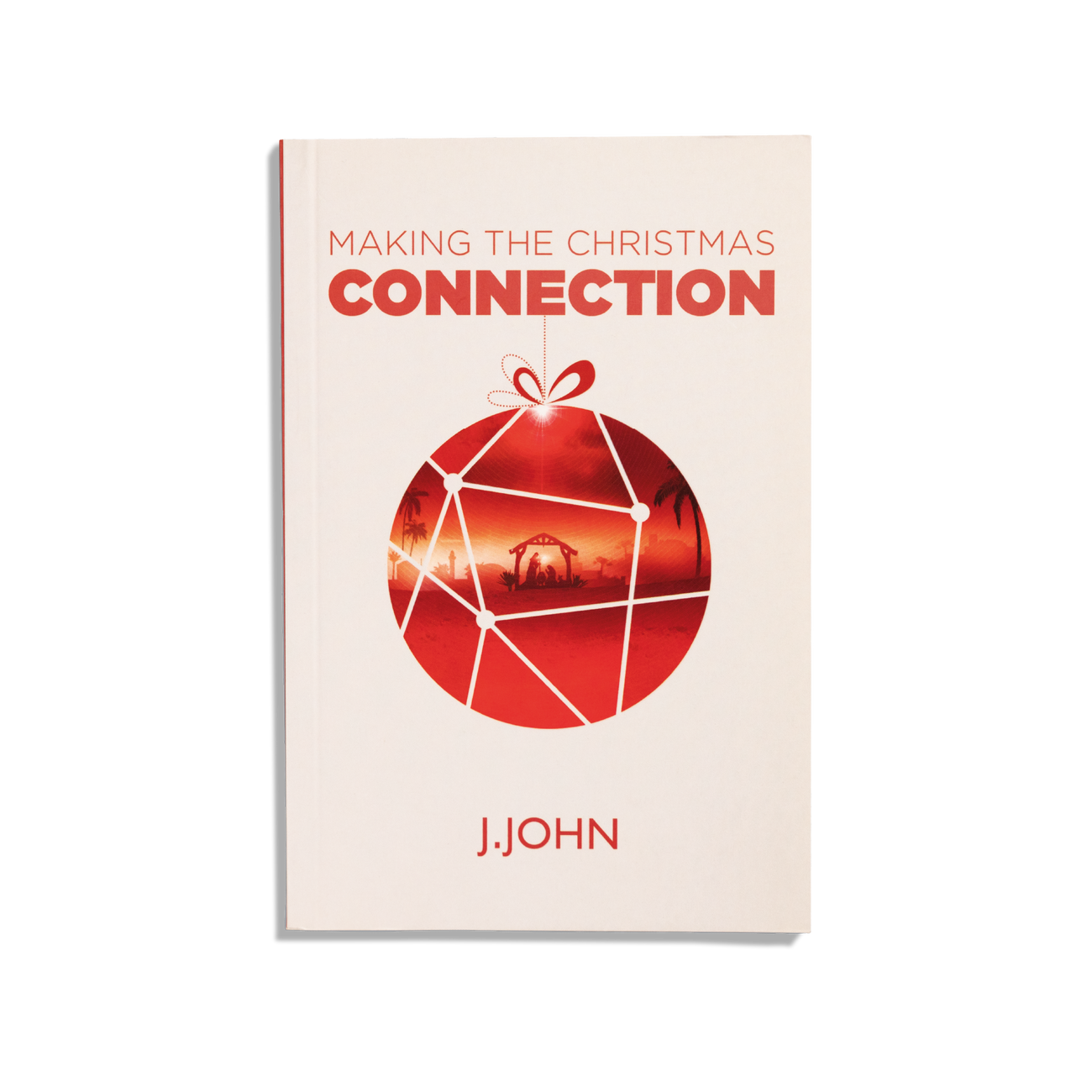
Booklet: Making the Christmas Connection

This book will help you connect the Christmas story with God and how He wants to connect with us....

J. John in this book unpacks who is God and how he connects and interacts with us, and the Christmas story plays a major role in this

Find out and discover something more about who God really is and exactly how he feels about us. Find out how we lost our connection with God and how our connection can be restored.


Saturday, December 12, 2020

Book: How to Talk about Jesus (Without Being That Guy): Personal Evangelism in a Skeptical World

Most Christians know they should be trying to tell their friends and family about Jesus. But in a post-Christendom world, personal evangelism is viewed negatively--it's offensive, inappropriate, and insensitive. Recent studies confirm that the majority of Christians rarely evangelize, worried they might offend their family or lose their friends. In How to Talk About Jesus (Without Being That Guy), author Sam Chan equips everyday Christians who are reluctant and nervous to tell their friends about Jesus with practical, tested ways of sharing their faith in the least awkward ways possible.

Drawing from over two decades of experience as an evangelist, teacher, and pastor, Chan explains why personal evangelism feels so awkward today. And utilizing recent insights from communication theory, cross-cultural ministry, and apologetics, he helps you build confidence in sharing your faith, and teaches you how to evangelize your friends and family in socially appropriate ways.

Tuesday, October 27, 2020

Book: Speaking Boldly - Sharing God's Word Every Day

Speaking Boldly

We are all called to speak God's Word with one another, yet this can be an extremely daunting task. We are afraid of saying the wrong thing, not having the right answers, or even coming across as judgmental.

Rev. Dr. Edward Grimenstein's work is here to help Lutherans gain confidence in speaking God's Law and Gospel with both boldness and love to those around us.

Learn how to teach the distinctly Lutheran teachings of Law and Gospel through each chapter, using information and theology from Luther's Small Catechism, Scriptures, and most importantly, God's Word for us all.


Thursday, May 02, 2019

Evangelism Tool: HIS coin

His Coin is an evangelism tool developed by Kevin H. Park to help you discuss and help people remember two key gifts from God, Grace and Mercy. 
Kevin sees them as two sides of the same coin.  


To order discover more about this story and to order the coins visit http://www.hiscoin.com/

Tuesday, February 05, 2019

Book: Lighthouses - Christian coaching in a post Christian World

A game changer in local mission. 
There are already a number of useful resources in the Christian marketplace that teach you how to engage with people who are open to Christianity, even if only tentatively. Lighthouses: Christian Coaching in a Post-Christian World offers something fresh and different; it presents a model for engaging with people who are barely curious about the gospel or even openly resistant to it. 
Evangelist and church planter Dean Eaton has teamed up with Christian clinical psychologist Dr. Paul Whetham to propose a fresh approach to gospel-sharing based on a coaching model. 
Lighthouses: Christian Coaching in a Post-Christian World explains how to engage people in a 'wellbeing conversation' that leads naturally to an exploration of their identity in God. The book draws heavily on materials developed by Dr. Whetham for Soul Food Café (www.soulfood.cafe), an online resource centre for contemporary gospel-sharers. The basic idea is that by transforming community meeting places and church cafes into informal sacred spaces where people 'do life together', you can embark on the search for meaning and give voice to the deeper things of the soul. 
Lighthouses: Christian Coaching in a Post-Christian World is highly recommended for people looking for a fresh approach to mission and evangelism.

Contents
Reimaging the role of an evangelist - Lighthouse coach
Faith and the Search for meaning
Resilience - developing a contemplative and compassionate mind
Enriched environments 
The Mission

You can purchase Lighthouses from Amazon or if you are in Australia from ACR

Friday, November 09, 2018

Book: The sacrament of evangelism

A recent statistic suggests that 15% of the churches in America are growing but only 2.2% are growing evangelistically.

Much of the church in America has lost its evangelistic zeal and forgotten how to re-ignite it; this book is an attempt to light the fuse of the powder keg so that the church, long-distracted by so many things, might return to its primary mission in the world.

We do not take Christ to anyone; He is already there. We go to make explicit what we see Him doing implicitly. It is not a question of whether God is at work in His world . . . Our hope is to see more of God’s people at work with Him! Learn about why we share our faith, Christ's role in our evangelism, the deep longings in all our hearts, and how to effectively live a sacramentally evangelistic lifestyle.

We are offering a way of looking at life and the world that is open to God’s presence everywhere. This approach is called sacramental. And where better to experience God’s presence than in His workplace? This is the Sacrament of Evangelism.

Contents

Section One:  Preliminaries
Section Two:  Abiding in Christ
Section Three: The Gospel and Humanity
Section Four:  Content and follow up


Wednesday, August 15, 2018

Book: Gospel Speech

We all have a different relationship with speech. Some of us love it, some of us... not so much. For some it depends a lot on the context: speaking on the phone with a friend is perfectly enjoyable; speaking publicly in front of an audience is our worst nightmare. Some of us speak at a million miles an hour, while some of us have a slow and measured pace, choosing every word carefully. In many ways, speech really is a reflection of who we are as individuals.

But if our speech really is a reflection of who we are, and if being a Christian is a fundamental and even primary way we describe ourselves, should we expect gospel speech to be on our lips?

In this refreshingly different look at what the Bible has to say about evangelism and our speech patterns as Christians, Lionel Windsor shows the connection between faith and speech, and encourages us to confess the Lord Jesus with our lips.

Lionel Windsor is a lecturer at Moore Theological College in Sydney.   

Contents
Are all Christians commanded to evangelize?
Shut your mouth
God puts the words right in your mouth
Saved by the mouth
Do you feel the need for speech?
Speech is in your DNA
insiders and outsiders
Learning how to talk


Tuesday, June 05, 2018

Paper: The Biblical basis of evangelism by John Stott

‘Mission’, ‘evangelism’, ‘dialogue’, ‘salvation’, and ‘conversion’—as Christians, we hear these words often, but over time their meanings can become muddled and distorted. How can we return to a biblical definition of these terms?  In 1974 John Stott  opened up the scriptures and provided biblical perspective at the  International Congress on World Evangelization.  He reminds us that the best way to renew our gospel zeal is to return to the source of God's Mission, God's Word.
https://www.lausanne.org/best-of-lausanne/john-stotts-biblical-basis-of-evangelism

Monday, June 04, 2018

Book: The gates of hell - confessing Christ in a hostile world

The Church is no longer the darling of the culture. Those who have the courage to confess the Bible’s truths are labeled haters, enemies of culture, and hurtful to the state. The adversarial relationship between our culture and Christians is not unlike the one faced by our fathers in the earliest days of the Church.

But the Bible was written in a cultural situation far worse than the one we face today. When we begin to fear that Satan is triumphing, we must hear our Lord tell us that He will build His Church, “and the gates of hell shall not prevail against it” (Matthew 16:18). So even though it seems like Satan is winning, Christ promises that the devil will not prevail.

Each sermon and essay in this volume testifies to the power of Christ’s promise to defend His Church. The Word of God does what it says, and the gates of hell will never prevail against the kingdom of Christ, the Church. Christ promises.

Table of contents
1 "Upon This Rock" (Matthew 16:13-20) Rev. Dr. Matthew C. Harrison 1
2 "Saying What God Says" (1 John 1:8-2:2) Rev. Dr. Herbert C. Mueller Jr. 7
3 "Held Fast to Hold Fast" (Hebrews 10:23) Rev. Dr. John C. Wohlrabe Jr. 11
4 "Joy in Jesus" (1 John 1:1-4) Rev. Dr. Scott R. Murray 15
5 "Ifs All about Love" (Leviticus 19:15-18) Rev. Nabil S. Nour E. 19
6 "Saints and Faithful Brothers" (Colossians 1:1-14) Rev. Christopher S. Esget 23
7 "Built on the Rock-Confess" Rev. Dr. Daniel O. S. Preus 27
8 The Gates of Hell and the Religion of Sex Rev. Dr. Scott R. Murray 41
9 The Gates of Hell: Luther and the Two Kingdoms Rev. Dr. Matthew C. Harrison 73
10 The Gates of Hell and the Status of the Church in Western Society Rev. Dr. John C. Wohlrabe Jr. 105
11 The Gates of Hell: Defying the Devil in International Mission Work Rev. Dr. Daniel O. S. Preus 141
12 The Gates of Hell and the Table of the Lord Rev. Christopher S. Esget 167
13 The Gates of Hell and the Urgency of Preaching Rev. Nabil S. Nour 197
14 The Gates of Hell and Defending the Faith against Them Rev. Dr. Herbert C. Mueller Jr. 219


Wednesday, November 08, 2017

Evangelism: Everyone His Witness

Every One His Witness is a Lutheran evangelism program that teaches you to witness to your friends, coworkers, and any other nonchurched people you may know.  Using the LASSIE approach to witnessing (listen, ask, seek, share, invite, and encourage), the Every One His Witness kit will help you to learn how to naturally share the Good News of Jesus Christ through relational, contextual witnessing.

What does this mean? 
It means listening to those who are unsure about Christianity. It means asking questions that aren’t accusatory. It means sharing the Good News about Jesus. Notice how there’s no bashing, no judgment, and no forced imposition of beliefs. Instead, there’s understanding, communication, and honesty between friends. And Every One His Witness teaches you how.

Every One His Witness is available from
CPH


What People are Saying about Every One His Witness

“Finally, a natural way to share your faith in the relationships where God has planted you as you care for others who have been broken by sin. I have already started to use this and am excited to share this resource with the people of my district.”  —Rev. Richard Snow, President, LCMS Nebraska District

“I appreciated the theologically sound Lutheran perspective of the E1HW program. The videos and our facilitator did a good job of demystifying conversations about our faith in Christ with neighbors, colleagues, and family members. It was a great encouragement to talk about Jesus Christ with anyone in an unforced, natural way.”  —Rev. Kris Morris, Christ the Vine Lutheran Church, Damascus, Oregon

“The Every One His Witness seminar and workbook provide valuable, practical tools on how to share Jesus’ story in the context of our daily vocations, showing how to develop relationships with family, neighbors, and coworkers whom we already know.”  —Bob Myers, Pensacola, Florida

For more information on LASSIE visit


Wednesday, May 24, 2017

RCL Lectionary Missionary Snippets June 2017

Mission Snippets are short statements for the church (ie.  all who believe in Jesus) to help us live out our calling to make disciples of all nations.   They are based on the Revised Common Lectionary readings for the week, with June 2017's being based on the Gospel Reading.  

Some thing to note in understanding the Mission Snippets, they are written from the perspective:


  • The Church is all Christians (not the building, the insitution, the legal identity, etc.)
  • That as God's Church we have received His Good News and know that our salvation is totally dependant on what God has done through Jesus Christ.
  • That having received God's Good News we are not called to keep it to ourselves, but God has called every Christian to be sharing His Good News.
  • They are what they are, snippets to encourage you to ask questions, to explore more, to discuss further....


June 4  Pentecost Sunday
John 20:19-23
Jesus brings peace even when there is fear
19 On the evening of that first day of the week, when the disciples were together, with the doors locked for fear of the Jewish leaders, Jesus came and stood among them and said, “Peace be with you!”    John 20:19
What fears do you have in relation to your faith?
What fears might others have in relation to having faith in Jesus?
How does the presence of Jesus help overcome our fears?
How do we be in the presence of Jesus today?
How do we help others to be in the presence of Jesus?

Holy Spirit – the power for forgiveness
22 And with that he breathed on them and said, “Receive the Holy Spirit. 23 If you forgive anyone’s sins, their sins are forgiven; if you do not forgive them, they are not forgiven.”   John 20:22-23
In Acts 10:44 we are told that the Holy Spirit came on all who heard the message, how are you regularly hearing the Gospel and God’s Word so you are regularly receiving God's Spirit?
How are you helping and encouraging others to hear God’s Word so they can regularly receive the Holy Spirit?
What opportunities exist for you to bring God’s forgiveness, specifically, into the lives of others?
Why might you need the Holy Spirit to do this?

June 11  Trinity Sunday
Matthew 28:16-20
Being active despite doubts
When they saw him, they worshiped him; but some doubted.   Then Jesus came to them and said, “All authority in heaven and on earth has been given to me.    
Matthew 28:16-17
What doubts do you have about Jesus?
What doubts do other Christians you know have about Jesus?
What does it mean for Jesus to say to you even though you may have doubts “all authority on heaven and earth has been given to me.  Therefore go……”?
How do we assist others who have doubts to be actively involved in making disciples for Jesus?

Making disciples – baptising, teaching, and being with Jesus
19 Therefore go and make disciples of all nations, baptising them in the name of the Father and of the Son and of the Holy Spirit, 20 and teaching them to obey everything I have commanded you. And surely I am with you always, to the very end of the age.” 
How is your life centred on making disciples?
How are you leading people to baptism?
What are you teaching people about Jesus?
What are the blessings as disciplemakers we receive by always being with Jesus?

June 18 Proper 6
Matthew 9:35-10:8
Jesus ministry involves teaching, proclaiming the Good News and healing.
35 Jesus went through all the towns and villages, teaching in their synagogues, proclaiming the good news of the kingdom and healing every disease and sickness.   Matthew 9:35 
How are you regularly receiving teaching from Jesus?
Explain the Good News in your own words.
What does healing from Jesus look like?
Who are the people you are going to meet who you can teach, proclaiming the Good News  and brining healing from Jesus to?

Jesus’ ministry involves having compassion for the majority
36 When he saw the crowds, he had compassion on them, because they were harassed and helpless, like sheep without a shepherd.  Matthew 10:36 
Who or what do the crowds look like  in your life?
What is harassing them resulting in them being helpless?
What teaching do they need from Jesus?
How might you show Jesus’ compassion to the majority?

Don’t be overwhelmed, rely on God and be part of God’s solution
37 Then he said to his disciples, “The harvest is plentiful but the workers are few. 38 Ask the Lord of the harvest, therefore, to send out workers into his harvest field.”  10 Jesus called his twelve disciples to him and gave them authority to drive out impure spirits and to heal every disease and sickness.   Matthew 9:37-10:1
What resources do you believe are needed to do God’s work in your environment?
What is God calling you to pray about and for?
How might Jesus be calling you to be part of his ministry solution?

Freely you have received freely give
As you go, proclaim this message: ‘The kingdom of heaven has come near.’   Heal the sick, raise the dead, cleanse those who have leprosy, drive out demons. Freely you have received; freely give.   Matthew 10:7-8
What is it that you have received from God?
What does it mean for you to give it freely to others?
How does this affect how you give?


June 25 Proper 7
Matthew 10:24-39
Being like God
“The student is not above the teacher, nor a servant above his master. 25 It is enough for students to be like their teachers, and servants like their masters.  Matthew 10:24-25 
What activities and situations are helpful in shaping you to learn from God to be like God?
What does it mean for you to be like God?
How are you helping others be like God?

Fearing God who cares,  more than fearing other things, ideas and people
28 Do not be afraid of those who kill the body but cannot kill the soul. Rather, be afraid of the One who can destroy both soul and body in hell.  29 Are not two sparrows sold for a penny? Yet not one of them will fall to the ground outside your Father’s care. 30 And even the very hairs of your head are all numbered. 31 So don’t be afraid; you are worth more than many sparrows.  32 “Whoever acknowledges me before others, I will also acknowledge before my Father in heaven. 33 But whoever disowns me before others, I will disown before my Father in heaven.     Matthew 10:28-33
What or who are you fearful of and why?
Why is it more important to fear God than anyone or anything else?
What does it mean to practically acknowledge God before others?
How we can help people with their fears that affect their relationship with God?

Godly peace over worldly peace
34 “Do not suppose that I have come to bring peace to the earth. I did not come to bring peace, but a sword. 35 For I have come to turn “ ‘a man against his father, a daughter against her mother, a daughter-in-law against her mother-in-law—  36 a man’s enemies will be the members of his own household.’    Matthew 10:34-36
What is the difference between Godly peace and worldly peace?
Why is it important to understand the difference between Godly peace and worldly peace?
How do we help people have Godly peace when their life is not peaceful?

Losing our lives to live
39 Whoever finds their life will lose it, and whoever loses their life for my sake will find it.   Matthew 10:39
Have you ever encountered someone who appears to live this out, what does it look like?
Why do you think Jesus wants us to lose our life, and what does this mean?
How would you explain this verse to someone exploring God, Jesus and Christianity, in the light of our salvation comes through the life, death and resurrection of Jesus?

Feel free to use these snippets for ministry and mission work in your own life and congregational life.

Prepared by Pastor Richard Schwedes richardschwedes@gmail.com

Monday, April 24, 2017

Book: Unscary Evangelism

This book has come about because there are so many people concerned about the need to share our faith. It occurred to me that we seem to be making evangelism much harder and scarier than it needs to be. Essentially evangelism is introducing a person to your best friend.  So we need a way to put that in terms that people can grasp.
The other thing that came to me is that people need help with this process. We need to be guided and mentored along the way. This book seeks to provide a way for pastors and churches to do that. Rob Edwards

What others are saying about this book
Anyone who reads this book should gain a new confidence and a new motivation to gossip the Gospel with all the people they have the honour to have influence over. Thanks Rob for reminding us that this is the real bread and butter of Christian life and living. The church needs to be missional if it is a real church. Rev Dr. C.I. Ganter Senior Pastor Rockhampton Baptist Church
Every believing Christian would be helped by reading this book. Rob's wisdom will position many for a fresh approach to loving others and being real with their friends. It's vital in our day, too, for even in our culture the fields are still -white unto harvest, - and despite appearances, the years ahead represent a more fruitful season for seeing many turn to the truth of Christ than at any other time in recent history. But this will happen mostly through friendships and personal connections. John Alley, Peace Christian Church, Rockhampton.

About the author
Rob Edwards is the pastor of the Rockhampton Lutheran Church in Queensland Australia

To buy a kindle version of the book visit here
To buy a paper back version of the book visit here

Lectionary Mission Snippets - May

Mission Snippets are short statements for the church (ie.  all who believe in Jesus) to help us live out our calling to make disciples of all nations.   They are based on the Revised Common Lectionary readings for the week, with May 2017's being based on the Gospel Reading.  

Some thing to note in understanding the Mission Snippets, they are written from the perspective:

  • The Church is all Christians (not the building, the insitution, the legal identity, etc.)
  • That as God's Church we have received His Good News and know that our salvation is totally dependant on what God has done through Jesus Christ.
  • That having received God's Good News we are not called to keep it to ourselves, but God has called every Christian to be sharing His Good News.
  • They are what they are, snippets to encourage you to ask questions, to explore more, to discuss further....

May 7
John 10:1-10  
10:3 The doorkeeper opens the door for him, and the sheep hear his voice. He calls his own sheep by name and leads them out.
Helping people hear Jesus
What opportunities exist for us to help people hear Jesus?
What might it take for you to help people really hear who Jesus is and what He was on about?
Is it a matter of helping people recognise Jesus' voice?

10:9 I am the door. If anyone enters through me, he will be saved, and will come in and go out, and find pasture.
Point people to the Jesus door
There are many options for us that appear to be offering 'life',  
Are you using the Jesus door, regularly?
What makes the Jesus door different?
How can you help people discover or choose the Jesus door?


May 14
John 14:1-14 
14:2There are many dwelling places in my Father’s house. Otherwise, I would have told you, because I am going away to make ready a place for you.  
God’s place is mammoth….there are many places available
How are you helping people see there is a place for them?
If there are many places, isn't likely there will be many different people?

14:6 Jesus replied, “I am the way, and the truth, and the life. No one comes to the Father except through me.
Direct people to Jesus and away from other alternatives for life
The key or password to heaven is not me, I, my achievement, my tradition, my but Jesus
Does  you approach to life reflect you see Jesus as the way, the truth and the life?
How are you helping people rely solely on Jesus for life?

14:7 If you have known me, you will know my Father too. And from now on you do know him and have seen him.” 
It is important for us to know Jesus –(and to know means spending regular time with Jesus) 
How are you spending time with Jesus?
What do you know about Jesus?
Are you sharing what you know about Jesus?

May 21
John 14:15-25
14:26  But the Advocate, the Holy Spirit, whom the Father will send in my name, will teach you everything, and will cause you to remember everything I said to you.
We need to depend totally  on God’s Spirit for help
God's Spirit comes to us through God's Word and the sacraments.....are we engaging regularly with God's Word and regularly receiving His sacraments?
How are we helping others to engage regularly in God's Word and sacraments, so the Holy Spirit can work in their lives? 

14:16 Then I will ask the Father, and he will give you another Advocate to be with you forever—14:17 the Spirit of truth, whom the world cannot accept, because it does not see him or know him. But you know him, because he resides with you and will be in you. 
Don’t expect to be accepted in the general community
Are we looking to be more popular with God or the world?
Are we being truthful with each other about the challenges of being a Christian?
How do we support each other as we share the Good News, even when it is not generally popular?

14:23 Jesus replied, “If anyone loves me, he will obey my word, and my Father will love him, and we will come to him and take up residence with him. 14:24 The person who does not love me does not obey my words. And the word you hear is not mine, but the Father’s who sent me. 
Our lifestyle is one that reveals we love God and this means we focus on obeying His commandments
Is your lifestyle orientated towards loving God, by keeping His commandments?
How do we help people see the right perspective that keeping God's commandments is not about earning  a relationship with God, but flow from our relationship with God? 

May 28
John 17:1-11
John 17:1 When Jesus had finished saying these things, he looked upward to heaven and said, “Father, the time has come. Glorify your Son, so that your Son may glorify you—   
Glorifying God is the purpose for Jesus and us
In looking at your life, who or what is being glorified?
What does glorifying God look like?
How do we help people glorify God?

17:2-3 just as you have given him authority over all humanity, so that he may give eternal life to everyone you have given him. 17:3 Now this is eternal life—that they know you, the only true God, and Jesus Christ, whom you sent.
God’s gift to us is Jesus and eternal life
What other gifts may people be expecting from God?
What makes the gift of Jesus and eternal life different from the other gifts of God?
How are we helping people see that God is focussed on giving us the gift of Jesus and eternal life?

17:7-8  Now they understand that everything you have given me comes from you, 17:8 because I have given them the words you have given me. They accepted them and really understand that I came from you, and they believed that you sent me
Share the words and message you receive from Jesus
How are you regularly receiving and rehearing the words and messages of Jesus
What specific words and message have you received from Jesus?
How are you passing on the words and message from Jesus to the people you are interacting with?

Feel free to use these snippets for ministry and mission work in your own life and congregational life.

Prepared by Pastor Richard Schwedes richardschwedes@gmail.com

Monday, April 03, 2017

Book and Bible Study: SENT seeking the orphans of God

The SENT seeking the orphans of God series  explains in simple language how to approach the task of relational evangelism among your relatives and friends. It also details the process of how to set up and develop local mission in a congregation of any size.

Sent Seeking the Orphans of God is for anyone concerned about how to participate with God in sowing the gospel and reaping the harvest.

Many books on missional living describe how to form missional communities and the people within them, but this book goes beyond this to describe how a missional community does relational evangelism together.

It provides small group Bible studies and activities at the end of each chapter, introduced through online video interviews with experienced evangelists. These activities facilitate dialogue and discernment about how to approach the task of relational evangelism amongst your relatives and friends.

Plus, there are two supplementary bonus resources included in this book.

RENEW Love Life Communities: an eight week small group Bible study designed to enable the formation of a team who engages in relational evangelism within your congregation or church planting team.

RENEW Missional Leadership: ten devotions for congregational leaders designed to set up a structure for making disciples who make disciples and facilitate training and support for the church to reap and receive the harvest

Believers feeling confused or apathetic about reaping the harvest will discover here a practical resource which is an encouragement to see, hear and become involved in what God is already up to in people's lives.

What others are saying
Dean Eaton is a faithful guide who gives us concrete ways to join God in helping to bring people into God's family in everyday kind of ways. This book reflects a missional theology that will help you cultivate an inclusive loving community that invites all to live into the divine dance of the Father, Son and Spirit. J.R. Woodward, National director, V3 Church Planting Movement. Author, Creating a Missional Culture, Co-author, The Church as Movement

Sent Seeking the Orphans of God and the accompanying Love Life Community studies are quite possibly the spark that could bring your church alive. Dr Andrew Menzies, Principal Stirling Theological College - University of Divinity.

If you hear God calling you to bring Jesus to your friends, neighbours and workmates, then this is a must-read book for you. Dr Steen Olsen. Director for Mission for the Lutheran Church in South Australia and the Northern Territory former Bishop of the Lutheran Church of New Zealand.

Dean Eaton is an experienced church planter, missional trainer and mentor. He has participated with Christ in church plants in rural, suburban and urban settings in Australia and Japan. Formerly the Principal of Tabor College Australia he is keen to train a new generation of evangelists.

What is available:
SENT: Seeking the Orphans of God book (download PDF available here; or  purchase softcover book from Amazon)
SENT: Seeking the Orphans of God  videos (available here), to accompany the group studies
SENT: Seeking the Orphans of God promotional tools

Read the book, watch the online video interviews with experienced practitioners, dialogue with your friends using the small group Bible study, and get ready to reap the harvest.


Monday, February 06, 2017

Wednesday, August 17, 2016

Artilce: Which comes first evangelism or apologetics?

Tony Payne in an article appearing on http://gotherefor.com/offer.php?intid=29407 asks Which comes first: apologetics or evangelism?

This might seem a strange question, because it is often not only hard to answer but seemingly unimportant. In a gospel conversation with a friend over coffee, apologetic-style questions and gospel proclamation are often all mixed together. Who can predict or determine which comes first, and why would it matter?

However, the principle of whether apologetics or evangelism comes first does matter, and will affect our practice and activities—especially those we plan in advance, but even those that happen on the run.

I want to suggest that evangelism should be regarded as prior to apologetics, both logically and in the emphasis of our outreach. I have a number of reasons for saying so, but here I want to focus on just one—the nature of the gospel we proclaim.

The gospel is essentially a piece of news. When we ‘evangelize’ we announce that certain momentous events have taken place in history, the meaning and significance of which radically change the state of affairs and require a response from every person.

Evangelism is rather like what Australian Prime Minister Robert Menzies did in 1939 when he made the following announcement: “Fellow Australians, it is my melancholy duty to inform you officially, that in consequence of the persistence of Germany in her invasion of Poland, Great Britain has declared war upon her, and that, as a result, Australia is also at war”. Certain momentous events had taken place, the meaning of which meant that the situation for everyone in Australia had radically changed.

The gospel is like that. It’s the announcement that a man has died and risen from the dead, and that this means something now for our world—notably, that God has appointed this dead-and-risen Man (his own Son) as the Lord and Judge and Saviour of all, and that entry into his kingdom via repentance and the forgiveness of sins is now available to people from every nation in the world.

This is what we broadcast, and (like Menzies’s broadcast) it doesn’t need much introduction or preamble, nor very much effort to establish a common interest in the importance or relevance of the message. If this momentous news is true, then it quite obviously changes everything for every person in the world. We all now live in a world ruled by the man who rose from the dead.

Mind you, what was said by Menzies may well have generated questions from his listeners: Is Menzies telling us the truth? If Germany is still invading Poland, why is this prompting Great Britain to declare war? Should Australia be part of this war? And so on.

In much the same way, the news about Jesus will also generate questions: Is it possible or plausible that someone should rise from the dead? Who is the God who has crowned him as Lord and Judge and Saviour? Why is repentance and forgiveness necessary? What does this mean for me? And more, no doubt, besides.

We’ll find ourselves answering all sorts of questions about the announcement. We will do all we can to persuade people that the announcement is indeed true and faithful, that as a result it is hugely significant, and that a response is therefore imperative.

Some of these questions we may anticipate as we make the announcement and explain its meaning. But logically and conceptually and ideally in practice, the apologia (or defence) follows the announcement, and is shaped by the announcement.

If our message was not an announcement of news—if it was something else—then this may not be the case. If our message, for example, was a qualitative claim that Christianity as a religion is beneficial or satisfying, and thus worth believing and following, then a great deal more preparatory and ‘apologetic’ work (if that is the right word) would need to be done. We would need to establish what constituted “beneficial and satisfying” (in terms that resonated with our hearers); we would need to deal with any of Christianity’s beliefs that were radically inconsistent with the beliefs of our hearers (for example, regarding science or sexual ethics); we would need to defend the actual record of Christianity from attacks that it had not, in fact, been beneficial or satisfying; and so on.

The qualitative superiority or desirability of Christianity is something that we would need to argue towards—and (in my observation) an increasing amount of Christian outreach activity has this character.

By contrast, the gospel is something we argue from—that we proclaim as momentous news, and then defend and explain.

Here then is the question that this brief reflection raises: What would be different about our personal and corporate evangelistic activity if we prioritised the gospel announcement, and let apologetics follow along behind?

First published in Vine Journal #3 (April 2016).

Enjoyed this page? Tell someone else! Tweet or Share
Want to know when we publish more content? Sign up for our free weekly email update.


Tony Payne

Tony started Matthias Media back in 1988, and is now its CEO. In the intervening years he has raised a family of five (with his wife Alison), completed a theology degree at Moore Theological College, and written or co-written numerous books and ministry resources—including The Trellis and the Vine, Fatherhood, Guidance and the Voice of God, and The Course of Your Life. He is also the Director of the Centre for Christian Living at Moore College.